
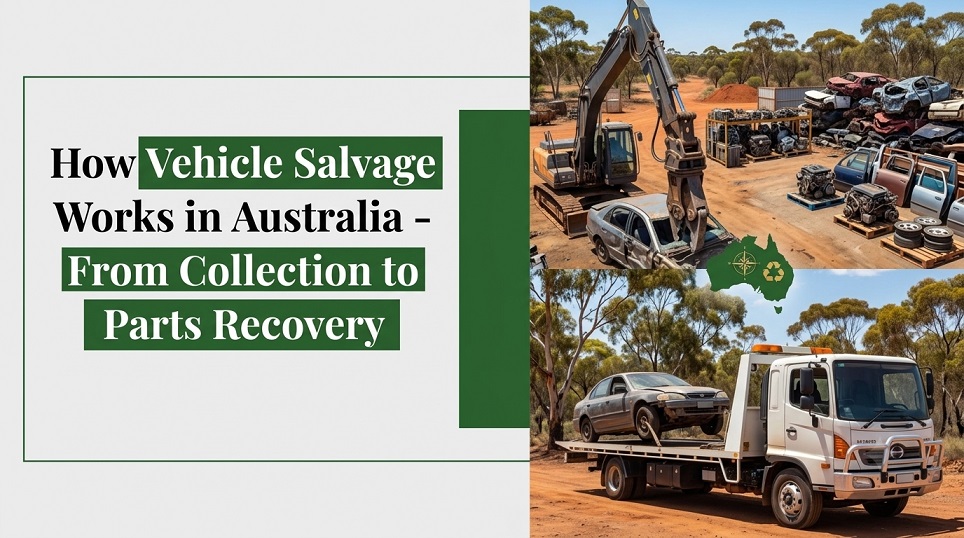
When a car reaches the end of its useful life, its value may extend beyond the vehicle itself. Depending on its condition, some components may be suitable for reuse, while metals and other materials may be recovered through recycling.
But how does a vehicle move from collection to parts recovery? What happens before components can be reused, and how are decisions made about the remaining vehicle?
At Metro Salvage, understanding this process helps explain why responsible vehicle salvage involves more than simply removing a damaged car. Each vehicle needs to be assessed on its own condition, with appropriate care taken during inspection, dismantling and material handling.
1. Collection Starts With Understanding the Vehicle
Before a vehicle can be collected, its condition and location need to be understood.
Important details include the vehicle’s make, model, approximate year, general condition and whether it can start, roll and steer. These details help determine the collection arrangements and equipment required.
For example, a car with a working engine may be straightforward to move, while an accident-damaged vehicle with locked wheels may require a different loading approach.
Access also matters. A vehicle parked in a narrow driveway, basement car park or confined space may need additional planning before collection.
Providing accurate information at this stage helps avoid unexpected problems and allows the team to prepare for the vehicle’s condition.
2. Inspecting the Vehicle After Arrival
Once the vehicle reaches the facility, its condition can be assessed in greater detail.
The inspection helps identify potential opportunities for parts recovery and highlights components that may be damaged, incomplete or unsuitable for reuse.
Several areas may require attention:
- Body panels: Doors, bonnets, guards and bumpers are checked for visible damage and condition.
- Mechanical components: Engines, transmissions and other major systems may need further assessment.
- Interior parts: Seats, trim, switches and dashboard components are considered according to their condition.
- Electrical components: Suitability depends on the component, compatibility and appropriate testing.
- Wheels and accessories: These are checked for damage, wear and suitability for their intended use.
A component that looks undamaged is not automatically safe or functional. Some problems cannot be identified through a visual inspection alone.
This is why the assessment should consider the part’s intended use and the checks required before it can be offered for reuse.
3. Deciding Which Parts May Have Further Use
Not every component from an end-of-life vehicle can be recovered for reuse. The decision depends on condition, compatibility, safety and practical demand.
For instance, a vehicle with major engine damage might still have body panels or interior components that are suitable for recovery. However, the condition of each item needs to be assessed separately.
Correct identification is also important. Vehicles of the same model can have different components depending on the build year, engine, trim level or other specifications.
Checking the relevant vehicle and part details helps reduce compatibility errors and makes it easier to identify the correct replacement component.
The aim is not to remove every part regardless of condition. It is to identify components that have a realistic potential for further use.
4. Safe Dismantling and Fluid Management
After assessment, suitable components can be removed through an organised dismantling process.
The work needs to account for the vehicle’s condition and the hazards associated with its different systems. Vehicles can contain fuel, engine oil, transmission fluid, coolant, batteries and other materials that require appropriate handling.
These substances must be managed carefully to reduce the risk of spills, exposure and environmental contamination. Certain components, including air-conditioning systems and high-voltage electric vehicle batteries, may require specialised procedures and appropriately qualified personnel.
Used oil is one example of a material that can be collected and recycled through suitable channels. The Australian Government provides guidance on recycling used oil.
Proper handling is an important part of responsible vehicle processing. It also helps prepare the vehicle for subsequent dismantling and material recovery.
5. Checking and Managing Recovered Parts
Removing a component is only one stage of parts recovery. Its condition must also be assessed before it can be offered for reuse.
Depending on the part, suitable checks may include visual inspection, functional testing or other appropriate assessments. The checks required for an engine, for example, will differ from those needed for a mirror or an interior trim component.
Accurate records can help identify the vehicle a part came from, confirm its specifications and document its known condition.
Recovered parts should be described honestly. A component should not be advertised as fully functional or tested unless the relevant checks have actually been completed.
Storage and identification are also important. Suitable organisation makes it easier to locate components and match them with the vehicles they are intended to fit.
Not every recovered component will find a buyer. Demand, condition, availability and compatibility all influence whether reuse is practical.
6. What Happens to the Remaining Vehicle?
Once suitable components have been removed, the remaining vehicle still needs to be processed.
Depending on its condition and the available facilities, metals may be separated and sent to appropriate recycling operations. Other materials may require different handling or recovery pathways.
The final outcome depends on the vehicle’s construction, the components already removed and the capabilities of the facilities involved.
This is why vehicle salvage should be viewed as a sequence of decisions rather than a single step. Inspection helps identify reuse opportunities, dismantling separates suitable components, and further processing helps direct the remaining materials to appropriate destinations.
To understand the broader process, read our guide to how car recycling works in Australia.
7. What Responsible Vehicle Salvage Achieves
A well-managed salvage process can give suitable components another opportunity for use and help recover materials that might otherwise be wasted.
However, the outcome varies from vehicle to vehicle. A badly damaged car may offer fewer reusable parts than a vehicle with sound components, and some items may be unsuitable for reuse regardless of their appearance.
Responsible processing means assessing each component carefully, managing hazardous materials appropriately and avoiding unsupported claims about recovery rates or environmental savings.
For vehicle owners, this provides a clearer understanding of what can happen after collection. For people looking for replacement components, it also highlights why condition, compatibility and accurate part information matter.
Final Thoughts
Vehicle salvage involves much more than collecting an unwanted car. The process includes assessing the vehicle, identifying suitable components, dismantling it safely and directing remaining materials to appropriate recovery pathways.
Each vehicle presents different opportunities and challenges. Careful inspection, accurate parts identification and responsible handling help determine what can be reused and what needs further processing.
Understanding these steps gives vehicle owners a clearer picture of how end-of-life vehicles can be managed and why responsible salvage practices matter.
