
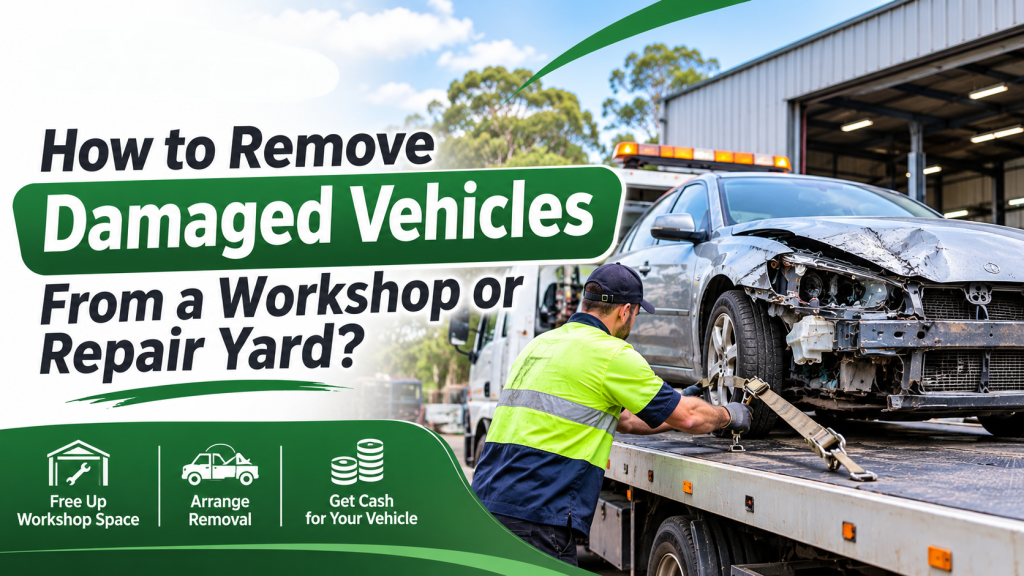
Damaged vehicles can take up valuable space in an automotive workshop or repair yard, especially when they are too expensive to repair or no longer suitable for road use. For mechanics, panel beaters and smash repair businesses, keeping unwanted vehicles for too long can make it harder to manage parking, move other cars and accept new repair jobs.
Some vehicles arrive after serious accidents, while others develop major engine, transmission or structural problems. When the owner decides not to proceed with repairs, arranging a suitable removal option can help free up valuable space.
Whether you operate a mechanical workshop, smash repair centre or vehicle storage yard, understanding how to organise damaged vehicle removal can make the process easier.
Why Do Workshops Need to Remove Damaged Vehicles?
Not every vehicle brought into a repair business can be returned to the road economically. In some cases, the estimated repair cost is higher than the vehicle’s market value. The owner may decide that spending more money on repairs is not worthwhile.
These vehicles can remain at the workshop while the owner considers their options, waits for an insurance decision or arranges collection.
Common examples include accident-damaged cars with significant body or structural damage, vehicles with blown engines or major transmission failures, written-off vehicles awaiting an authorised disposal arrangement, and old cars that customers have decided not to repair.
Damaged work utes, vans and 4WDs can also occupy valuable parking and storage areas when they are no longer economical to fix.
When several vehicles remain uncollected, they can reduce the space available for active repair jobs and make everyday workshop operations more difficult.
1. Confirm Vehicle Ownership Before Arranging Removal
The first step is to establish who owns the vehicle and who has permission to arrange its sale or removal.
A vehicle left at a workshop for repairs does not automatically become the workshop owner’s property, even if the customer has not collected it for several months.
Before contacting a vehicle buyer, check whether the vehicle belongs to a private customer, an insurance company following a total-loss settlement, a finance company or the workshop itself.
If the vehicle belongs to a customer, obtain clear written permission before arranging a sale or disposal. If an insurer or finance company has an interest in the vehicle, confirm that the relevant party has authorised the arrangement.
What if a customer never collects their vehicle? Australian states and territories have different rules for uncollected goods. Businesses may need to provide written notices, allow specific collection periods and follow additional procedures before disposing of a vehicle.
For example, NSW workshops should check the applicable uncollected-goods requirements before taking action. The correct procedure depends on the circumstances and the relevant state or territory laws.
2. Assess the Vehicle’s Condition
Once the necessary removal authority is confirmed, assess the vehicle and record its condition.
A damaged car does not necessarily need to start, drive or have a current roadworthy certificate to be considered for a purchase or removal assessment.
Useful details include the vehicle’s make, model and approximate year, engine and transmission condition, accident damage, whether it is completely non-running, missing components, and its current location.
Taking clear photographs of the front, rear, sides and damaged areas can also help when requesting an assessment.
These details give a vehicle buyer a better understanding of the car’s condition and allow them to consider its potential salvage value, reusable parts and collection requirements.
3. Choose the Right Option for the Damaged Vehicle
The most suitable option depends on the vehicle’s condition, ownership, repair costs and potential value.
Repair the vehicle
If the damage is manageable and the owner approves the repair estimate, completing the work may be worthwhile. This is more likely when the repair costs are reasonable compared with the vehicle’s value.
Sell the vehicle in its current condition
Some vehicles still have resale potential despite mechanical or cosmetic problems. An owner may prefer to sell the vehicle as-is rather than spend more money on repairs.
Arrange specialist damaged vehicle removal
When a vehicle has extensive damage, major mechanical problems or is no longer economical to repair, contacting a specialist damaged car buyer can be another option.
A vehicle buyer may assess the car based on its overall condition, salvage potential, reusable components and current demand. For owners considering this option, Metro Salvage provides a damaged car removal service for eligible vehicles.
4. Understand Written-Off Vehicle Requirements
Workshops regularly handle vehicles that have been declared a total loss by an insurer. However, not all written-off vehicles have the same legal status.
In Australia, written-off vehicles are generally classified as either statutory write-offs or repairable write-offs.
A statutory write-off has sustained damage severe enough that it cannot be returned to road registration. It is generally suitable for permitted dismantling or parts recovery.
A repairable write-off may be repaired and returned to registration if it meets the relevant state or territory requirements, including applicable inspections.
The rules and reporting obligations can differ depending on the vehicle and jurisdiction. Before arranging a sale, dismantling or collection, check the vehicle’s written-off status and applicable requirements.
5. Prepare the Vehicle for Collection
Once the owner has approved the removal and the vehicle buyer has been selected, prepare the car for collection.
Start by removing customer belongings, workshop tools, loose equipment and personal items. Check the cabin, boot, glovebox and storage compartments before handing over the vehicle.
Next, consider the vehicle’s physical condition and access to the collection area.
Some vehicles may have flat or missing tyres, damaged steering or suspension, locked wheels, missing keys or severe accident damage. Others may be parked inside a workshop with limited clearance for a tow truck or recovery vehicle.
A non-running vehicle may require suitable recovery equipment rather than a standard vehicle transporter.
If the vehicle is electric or hybrid and has sustained battery damage, fire damage or flood damage, disclose this before collection so appropriate handling arrangements can be discussed.
Providing accurate information beforehand helps the removal operator prepare the right equipment and reduces the chance of collection delays.
6. Arrange Collection Without Disrupting Workshop Operations
Workshop space is often limited, so it makes sense to organise vehicle collection around normal business activities.
Before confirming a collection, provide the removal company with the vehicle’s exact location, condition and access requirements.
For example, a damaged car parked outside may be straightforward to load, while a vehicle positioned behind several other cars or inside a narrow workshop may require additional preparation.
If several authorised vehicles need to be removed, ask whether they can be assessed together and whether collection arrangements can be coordinated.
It is also worth confirming the collection date, agreed purchase price, payment arrangements, loading requirements and whether any additional collection charges apply.
Clear communication can make the process easier for both the workshop and the removal operator.
7. Complete the Required Paperwork
Before the vehicle leaves the property, make sure the transaction is properly documented.
Depending on the ownership and disposal arrangement, relevant records may include written authorisation from the registered owner or authorised representative, vehicle make and model details, VIN information, a purchase or disposal agreement, payment confirmation and any required registration or written-off vehicle documentation.
Registration transfer, cancellation and written-off vehicle reporting requirements vary across Australian jurisdictions. Workshops should check the relevant transport authority’s instructions rather than assume that the same procedure applies throughout Australia.
Keeping copies of the paperwork can also help the business maintain accurate vehicle records.
How Metro Salvage Can Help With Damaged Vehicle Removal
When a vehicle is no longer worth repairing, selling it to a specialist vehicle buyer can be a practical alternative to keeping it in a workshop or repair yard.
Metro Salvage buys unwanted, damaged, scrap and non-running vehicles, offering cash for eligible vehicles and free vehicle removal.
This can include accident-damaged cars, old work utes, unwanted vans, damaged 4WDs and vehicles with serious mechanical problems.
To request an assessment, vehicle owners or authorised representatives can provide the vehicle’s make, model and year, current condition, type of damage, running condition, location and collection access. A few clear photographs can also help with the initial assessment.
Metro Salvage considers the vehicle’s condition and salvage potential when discussing an offer. Collection arrangements are confirmed according to the vehicle’s location and accessibility.
For workshops and vehicle owners looking to sell an unwanted vehicle, Metro Salvage car buyer in Australia provides another option for arranging a cash offer and vehicle removal.
Conclusion
Damaged and non-running vehicles are a normal part of many automotive repair businesses. However, keeping vehicles that are no longer required can reduce available workshop space and make everyday operations more difficult.
By confirming ownership, assessing vehicle condition, checking the relevant legal requirements and arranging suitable collection equipment, workshops can manage unwanted vehicles more effectively.
When an authorised owner decides not to proceed with repairs, a specialist vehicle buyer can provide another option for selling the vehicle and arranging its removal.
