
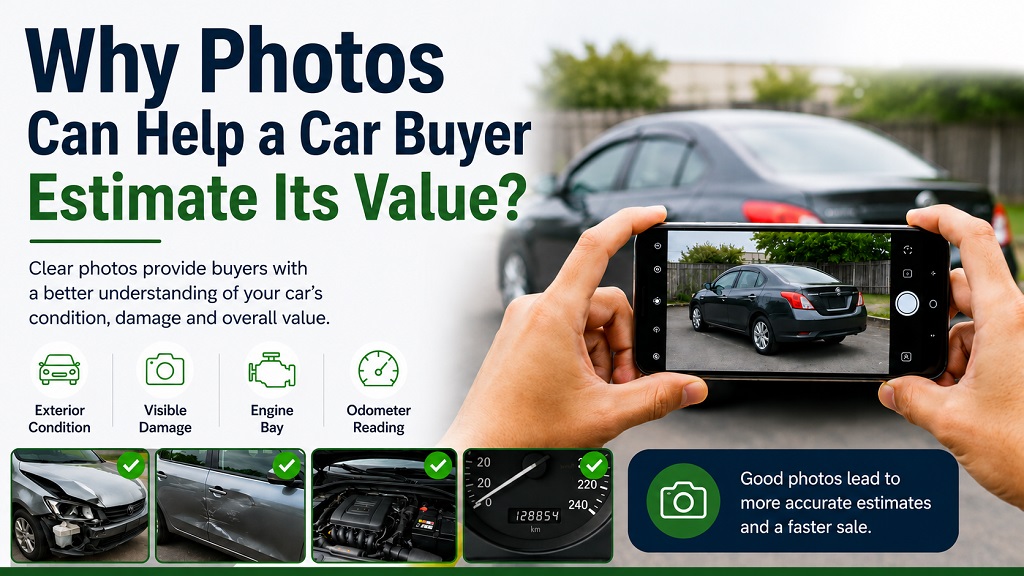
A few clear photos can tell a car buyer a surprising amount about a vehicle’s condition. When you are selling an old, damaged, unwanted or non-running car, photographs can provide useful information before the vehicle is physically inspected.
For a vehicle buyer, photos help create an initial picture of the car’s condition, visible damage and overall completeness. They do not determine the exact selling price, but they can make the first assessment more informed and efficient.
For sellers, taking the right photos can also help avoid misunderstandings about the vehicle’s condition and give the buyer a better understanding of what they are being asked to purchase.
What Can a Buyer Learn From Car Photos?
A good set of photographs can reveal several details that are important when assessing a vehicle.
Exterior images may show dents, scratches, rust, accident damage, broken lights, damaged panels or missing parts. Interior photographs can show the condition of the seats, dashboard, carpets and controls.
Photos of the engine bay may also reveal visible oil leaks, broken components, corrosion or missing parts. A clear dashboard photograph can show the odometer reading and, when the vehicle is operational, any warning lights displayed.
These details matter because a vehicle’s value is not based simply on its age or appearance. Its make and model, kilometres, mechanical condition, completeness, damage and potential for reusable parts can all influence its value.
Why Clear Photos Matter
The quality of the photographs can make a significant difference. A dark, blurry image taken from a distance may hide important details, while a well-lit photograph can give a much clearer view of the vehicle. You do not need professional photography equipment. A smartphone is usually enough. The main aim is to make the vehicle and any relevant damage easy to see.
If possible, take photographs in daylight and include:
- Front and rear of the vehicle
- Both sides
- Interior and seats
- Dashboard and odometer
- Engine bay
- Wheels and tyres
- Damaged areas
- Missing or broken components
Taking several photographs is generally more useful than relying on one image of the entire vehicle.
Show Damage Clearly and Honestly
If a vehicle has accident damage, rust, broken glass, flood damage or missing parts, photograph those areas clearly. For example, if the front of the car has been damaged, take one wider photograph showing the location of the damage and closer photographs showing the affected panels and components.
This gives a buyer more context than a close-up photograph alone. The same applies to vehicles that have been sitting unused. Flat tyres, rust, damaged bodywork and deteriorated components can all be relevant when estimating a vehicle’s condition.
Being transparent about known problems can help create a more accurate initial assessment. It is better to show the vehicle as it currently is than to leave important damage undisclosed.
Why Different Parts of the Car Matter
A vehicle buyer does not necessarily view an old or damaged car only as a complete vehicle. Depending on its condition, individual components may still have value. For example, an engine, transmission, wheels, doors, lights, interior components and other usable parts may be relevant when assessing a vehicle for salvage or recycling.
This is why photographs of specific areas can be useful. An engine-bay photograph can provide a visual indication of what components are present. Wheel and tyre photographs can show their condition. Interior photographs can help establish whether the cabin is complete and whether components may be reusable.
However, photographs cannot confirm the mechanical condition of these components. A clean-looking engine bay, for example, does not prove that the engine runs correctly.
Photos Are Especially Useful for Damaged or Non-Running Cars
Photographs can be particularly helpful when a vehicle is difficult or unsafe to drive. A severely damaged car may not be suitable for a normal road trip to a buyer or inspection location. Similarly, an old vehicle with a failed engine or transmission may not be roadworthy.
Providing photographs gives the buyer useful information about the vehicle before arrangements are made. For people searching for cash for cars in Brisbane, clear photographs combined with accurate vehicle details can make the initial valuation process more straightforward. Metro Salvage considers the condition and details of vehicles when assessing unwanted cars and other vehicles for purchase.
The same principle applies whether the vehicle is damaged, old, unwanted, non-running or no longer economical to repair.
What Photos Cannot Tell a Buyer
Photos are useful, but they have clear limitations. A photograph cannot confirm whether an engine starts, whether a transmission operates correctly or whether a vehicle has hidden structural damage. It may also be impossible to identify mechanical problems that are not visible from the outside.
A buyer may therefore need additional information, such as:
- Vehicle make, model and year
- Odometer reading
- Engine and transmission condition
- Registration status
- Accident or damage history
- Whether the vehicle starts or runs
- Missing keys or components
- Known mechanical problems
- Vehicle location
This is why a photograph-based estimate should be treated as an initial assessment rather than a guaranteed final price.
How to Take Better Photos of Your Car
You can make the valuation process easier with a few simple steps.
- Take photos in daylight: Natural light can make body damage, rust and scratches easier to identify.
- Show the whole vehicle: Take front, rear and side photographs so the overall condition is clear.
- Photograph damaged areas closely: Use additional close-up images for dents, broken panels, rust, cracked glass or other significant damage.
- Include the interior: Photograph the seats, dashboard and other important interior areas.
- Show the engine bay: If it is safe to do so, a clear engine-bay photograph can provide useful information about visible components and condition.
- Keep images clear: Avoid blurry, excessively dark or heavily edited photographs.
- Mention known problems: Photos work best when they are supported by an honest description of the vehicle.
Better Information Can Support a Better Assessment
The purpose of sending vehicle photographs is not to make a car look better than it really is. It is to give the buyer useful information before making an assessment. A damaged car may still have value because of reusable components, while an older vehicle may remain worthwhile even when repairing it no longer makes financial sense. The final assessment depends on the individual vehicle and its condition.
Providing clear photos, accurate vehicle details and an honest description gives a buyer a better starting point.
Get Your Vehicle Assessed With Metro Salvage
If you are considering selling an unwanted, damaged, old or non-running vehicle, start by gathering the basic information about the car and taking clear photographs. Metro Salvage, a salvage vehicle buyer in australia helps Australian vehicle owners find a straightforward way to sell cars that may no longer be suitable for everyday use.
Whether your vehicle has accident damage, mechanical problems, significant wear or simply has reached the end of its useful life, clear photographs can help communicate its condition. Ultimately, photos cannot determine a vehicle’s exact value on their own. They provide valuable visual information that can help a buyer understand the vehicle before a more complete assessment. Taking honest, well-lit photographs is therefore a simple step that can make the car-selling process clearer and more efficient.
