
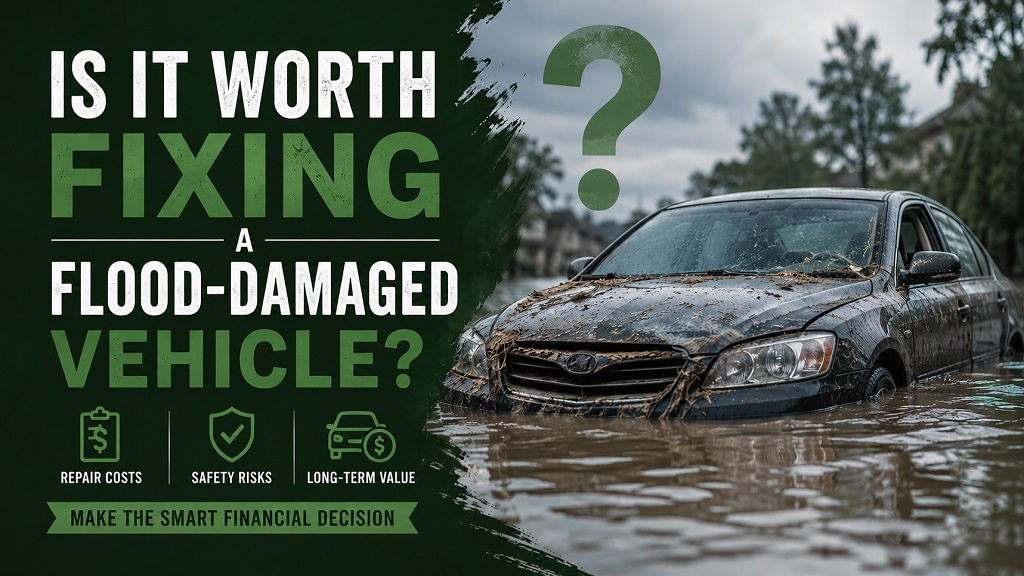
Floods can leave behind more than damaged roads and waterlogged homes. For many vehicle owners, one of the biggest questions after severe weather is whether repairing a flood-damaged car is actually worth the expense. The answer depends on several factors, including the level of water exposure, repair costs, insurance coverage and the long-term reliability of the vehicle.
In some cases, repairs may be practical. In others, selling the vehicle may save you from future mechanical and financial problems.
Understanding Flood Damage in Vehicles
Floodwater can affect almost every part of a car. Modern vehicles rely heavily on electronics, sensors, wiring systems and computer modules. Even a small amount of water entering the cabin can create hidden issues that appear weeks or months later.
Water damage often impacts:
- Engine components
- Transmission systems
- Electrical wiring
- Airbags and safety systems
- Interior materials and carpets
- Braking systems
- Sensors and onboard computers
According to automotive experts, floodwater can also lead to corrosion, mould growth and electrical faults that continue long after the car appears dry.
When Repairing May Be Worth It
Not every damaged vehicle is beyond repair. If the water level remained below the door sills and critical systems were untouched, repairs could be manageable.
Repairing may make sense if:
- The vehicle is relatively new
- Damage is limited to cosmetic or interior areas
- Insurance covers most repair costs
- The engine and electrical systems were not submerged
- The repair estimate is lower than the car’s market value
Some owners also choose repairs when the vehicle has sentimental value or when replacing it would cost significantly more. However, even after repairs, the car’s resale value can drop considerably because car buyers are often cautious about vehicles with flood history.
Hidden Problems That Can Appear Later
One of the biggest concerns with flood-damaged vehicles is delayed mechanical failure. A car may seem perfectly fine immediately after repairs, only to develop electrical issues months later.
Common long-term problems include:
- Corroded wiring
- Random warning lights
- Battery and alternator issues
- Mould and unpleasant odours
- Faulty sensors
- Air conditioning failures
- Rust inside hidden body panels
Mechanics often warn that floodwater damage can spread slowly through electrical systems and connectors. Once corrosion starts, repairs can become ongoing and expensive. This is why insurance companies frequently classify heavily flooded cars as write-offs rather than approving full repairs.
Insurance Plays a Major Role
Your insurance policy can heavily influence the decision. In Australia, flood damage is generally covered only under comprehensive insurance policies. If the repair cost exceeds the vehicle’s insured value, insurers may declare it a total loss or repairable write-off. In that situation, many owners decide it is more practical to move on rather than invest additional money into uncertain repairs.
Before approving any repairs, it’s important to:
- Obtain multiple repair quotes
- Check whether the insurer guarantees repairs
- Understand future resale implications
- Confirm whether the vehicle will receive a write-off title
These details can affect both your ownership costs and your ability to sell the vehicle later.
When Selling Makes More Sense
For older vehicles or cars with major water exposure, selling is often the smarter financial option. Severe flooding can damage electronics, engines, and safety systems beyond economical repair. Many owners choose professional salvage buyers instead of spending thousands on uncertain repairs. Cash for cars Brisbane services like Metro Salvage regularly purchase flood-damaged, non-running, and written-off vehicles in any condition. This option can help owners recover some value quickly without dealing with repair shops, inspections, or ongoing maintenance costs. Selling can also prevent future reliability problems that may appear long after the repairs are completed.
Signs the Vehicle May Not Be Worth Repairing
In many cases, repairing a flood-damaged car becomes financially risky. Here are some warning signs that replacement or selling may be the better option:
- Water reached dashboard level
- The engine ingested water
- Electrical systems are malfunctioning
- Airbags or safety systems were affected
- Repair estimates are extremely high
- Mould and corrosion are widespread
- Insurance classified the vehicle as a write-off
If several of these issues are present, repair costs can escalate quickly and still fail to restore the vehicle to its original reliability.
Conclusion
Flood damage Vehicle can create problems far beyond what is visible on the surface. While minor water exposure may be repairable, heavily flooded vehicles often develop long-term electrical and mechanical issues that reduce reliability and resale value. Before making a decision, compare repair costs against the vehicle’s market value and future risks. In some situations, repairing the car may be worthwhile. In others, selling the vehicle and moving on can save both money and frustration in the long run. Taking the time to assess the damage properly with advice from qualified mechanics and your insurer, is the best way to avoid costly surprises later.
